

Atlas AI™ triages. Clinicians decide.
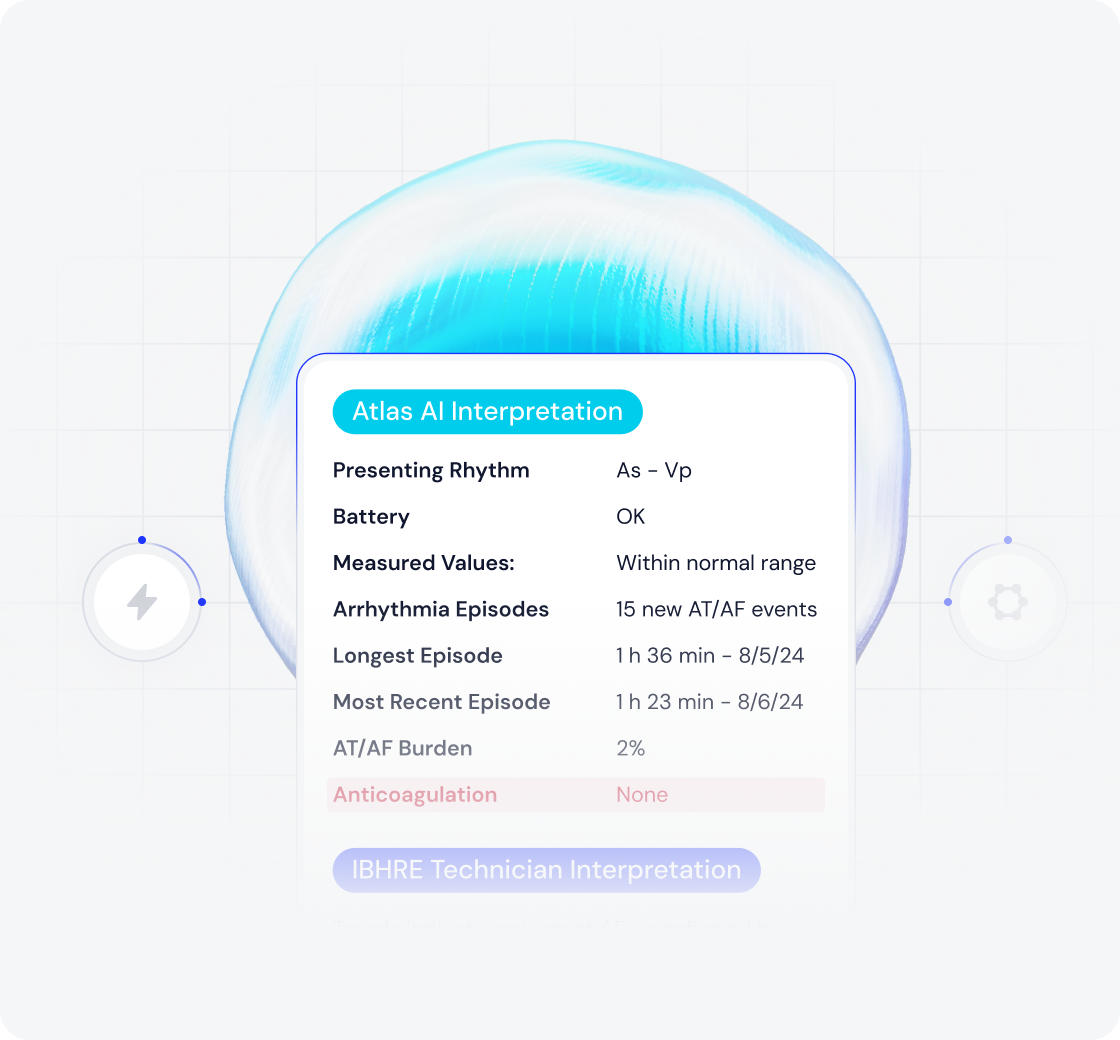
The Two-Brain Approach™ reached 99.5% accuracy across 690,673 transmissions at 78 US sites, published in JACC: Advances. Atlas AI™ prioritizes by acuity, and a qualified clinician confirms every transmission before it reaches your clinic.
Octagos is featured in CIED Management 2026, EP Lab Digest's educational supplement profiling the industry's CIED management leaders.
How do you evaluate a CIED remote monitoring vendor?
Software only or software + services, Octagos gives you the flexibility to build the right remote monitoring model.
See how Octagos stacks up across 10 key areas.

Every manufacturer, one workflow
All major CIED brands in one place. In-clinic sessions come through OctaSync™, discrete data included.
A clinician reads every transmission
Atlas AI™ prioritizes by clinical acuity, and a qualified clinician reviews and signs off on every one.
57% fewer non-actionable transmissions
Peer-reviewed in Heart Rhythm O2. Less noise reaching your staff, without changing who makes the call.
Urgent back in one hour
Routine transmissions within 24 hours. Clinician review sits inside both windows, and both beat HRS.
Same report structure every time
Nothing gets skipped, readers move faster, documentation is billing-ready, and records stay consistent.
Integration in 20 days on average
Built in-house at no cost, with 200+ live integrations spanning more than 20 EHR systems today.
Ten years of history carried over
Full Medtronic Paceart migration: demographics, device tracking, encounters, PDFs, and images. No charge.
Billing that closes the loop
Charges drop to the encounter and claims are created in your EHR, with no separate billing hand-off.
Ask Atlas™
Query your own remote monitoring data in plain language, including population health and trial screening.
Disconnected patients get called
A dedicated engagement team handles live calls, troubleshooting, education, and escalation for you.
How does Octagos remote monitoring work?
What is the Two-Brain Approach™?
Atlas AI™ evaluates each transmission against clinical context and prioritizes it by acuity. A qualified clinician then reviews it and makes the determination. Peer-reviewed final-report accuracy is 99.5%, published in JACC: Advances.
Does a clinician review every transmission?
In the Two-Brain Approach™ model, yes. Every transmission is reviewed by a qualified clinician, with provider oversight on all final determinations.
How long does EHR integration take?
Between 2 and 12 weeks, averaging 20 days. Integrations are built in-house at no cost, with role-based training before, during, and after go-live. Octagos has 250+ live integrations across more than 20 EHR systems.
Does Octagos migrate Medtronic Paceart data?
Yes. Migrations routinely carry ten years of history, including complete Paceart repositories, at no charge. That covers demographics, device and advisory tracking, encounters with discrete data, PDFs, and images.
Which manufacturers are supported?
All major CIED manufacturers, under unified alert protocols and reporting. In-clinic transmissions from Medtronic, Boston Scientific, and Biotronik programmers come through OctaSync™, including discrete data and PDFs.
How fast do urgent findings reach us?
Urgent alerts within one hour, routine transmissions within 24 hours. Clinician review sits inside both windows, and both exceed HRS guidelines.
What certifications does Octagos hold?
SOC 2 Type II, SOC 3, ISO/IEC 27001:2022, HITRUST, and HIPAA. Supported by annual penetration testing, role-based access, MFA, end-to-end encryption, a full audit trail on every alert and action. Learn more here.
Can we query our own patient population?
Ask Atlas™ is live. Clinicians ask questions in plain language and get answers from their own data, including population health analytics and screening for clinical trial eligibility.
Claims are easy.
Your numbers are the test.
Claims are easy.
Your numbers are the test.
Bring your transmission volume, staffing model, current turnaround times, and billing capture.